
Inspections
What a chimney inspection actually finds in Kansas City
A Kansas City chimney inspection is a documented look at everything accessible from the firebox to the crown — and what it turns up depends almost entirely on which side of the state line the house is on and what decade it was built.
$69 inspection — credited back in full when you book the repair
What you are seeing
- You have just bought the house and nobody has told you anything about the chimney
- It has been more than a year — or you genuinely cannot remember — since anyone looked at it
- You are about to light the first fire of the season and are not sure it is safe
- Something has changed: a smell, a stain, a draught, birds, or noise
The metro splits, and so does the fault list
Clay flue tile did not become standard practice in Kansas City construction until after the Second World War. Liners were not code-required until 1927 and enforcement lagged into the 1940s. So a pre-1920 house in the Northeast or Hyde Park may have no flue liner at all, and the liners that do exist were often corroded from the inside by decades of sulphur-rich coal and oil exhaust.
Cross into Johnson County and it inverts. Overland Park’s median home was built in 1989 and fewer than 2% of its houses predate 1940. Most of what we inspect there is not masonry at all — it is a factory-built metal chimney inside a wood-framed chase, and the thing that fails is the galvanised chase cover, rusting through from the underside where condensate collects and nobody ever looks.
Two completely different trades, twenty minutes apart. An inspector who does not know which one he is standing under will miss the fault that matters.
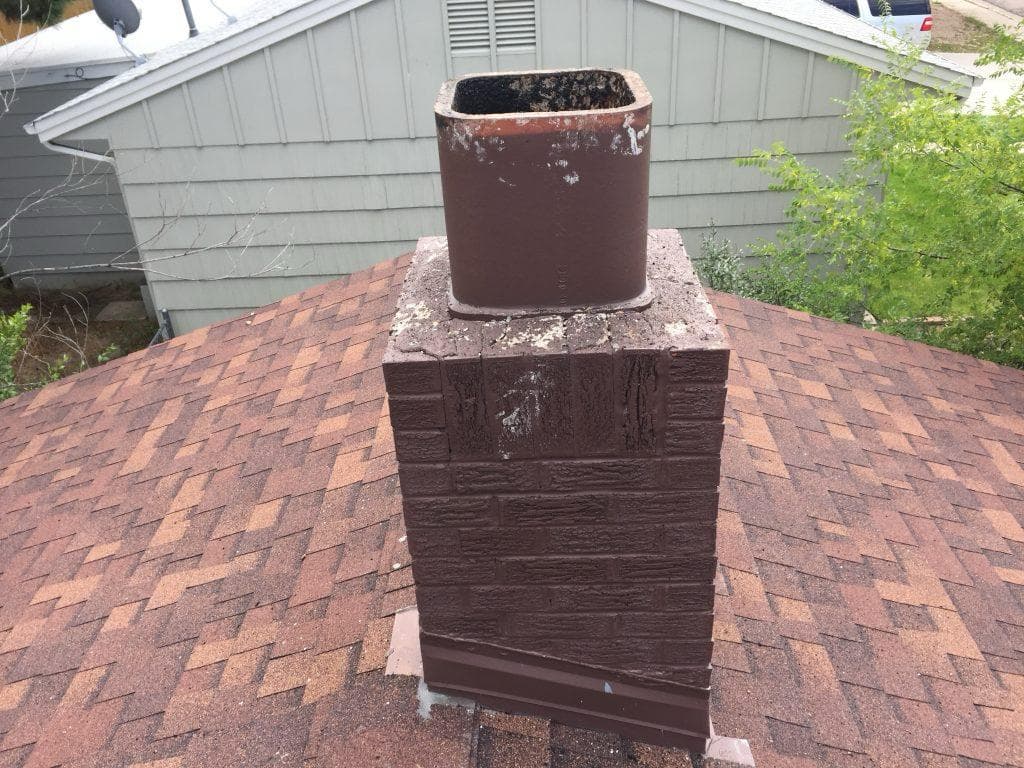
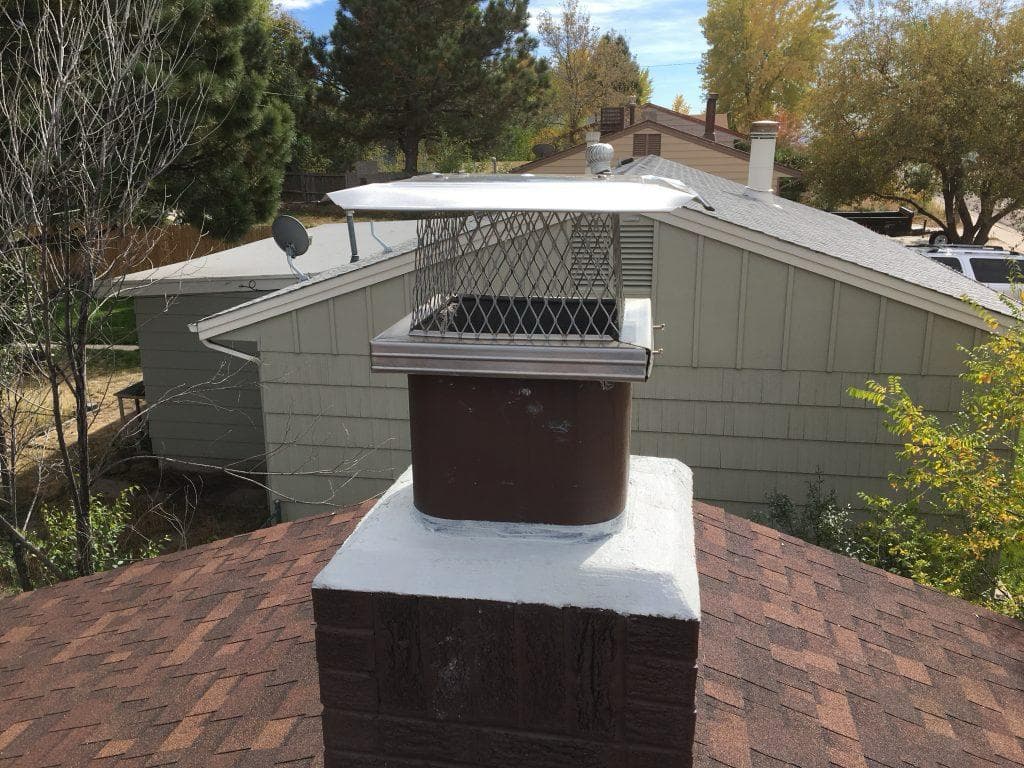
Every photo on this site is our own work. We do not use stock photography.
What we find most often
In rough order of how often it comes up across the metro:
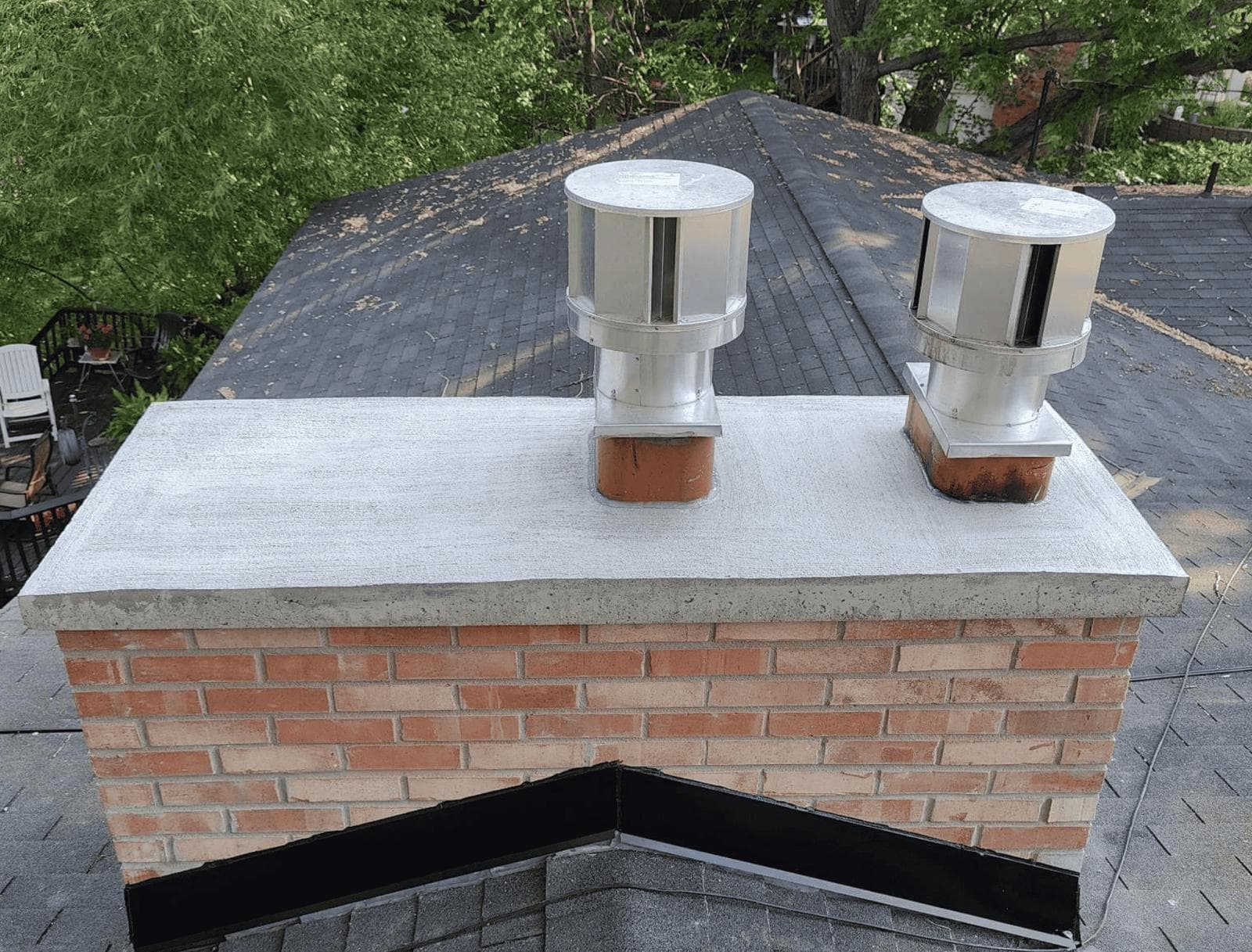
- A cracked crown — the concrete slab on top. Water goes straight down the flue through it and nobody sees the damage until it reaches the ceiling.
- A rusted or undersized chase cover on prefab chimneys, almost always galvanised rather than stainless.
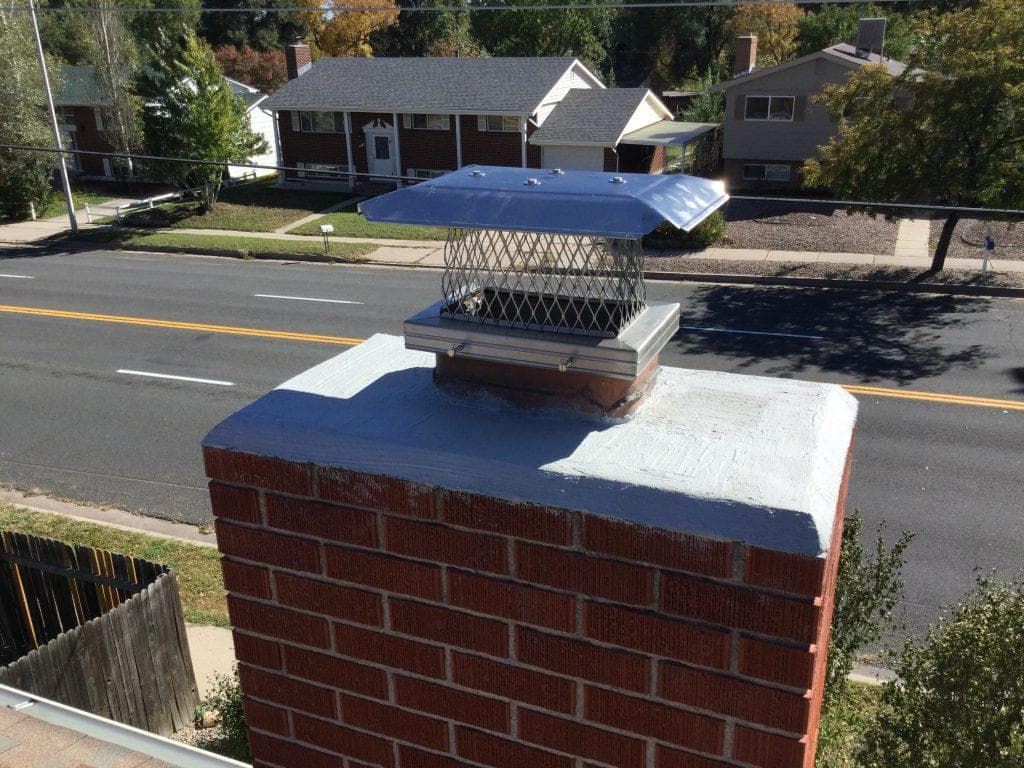
- Missing or damaged caps, which is how rain, squirrels and birds get in.
- Eroded mortar joints and spalled brick faces, which is freeze-thaw doing its work on a chimney that is wet when the temperature drops.
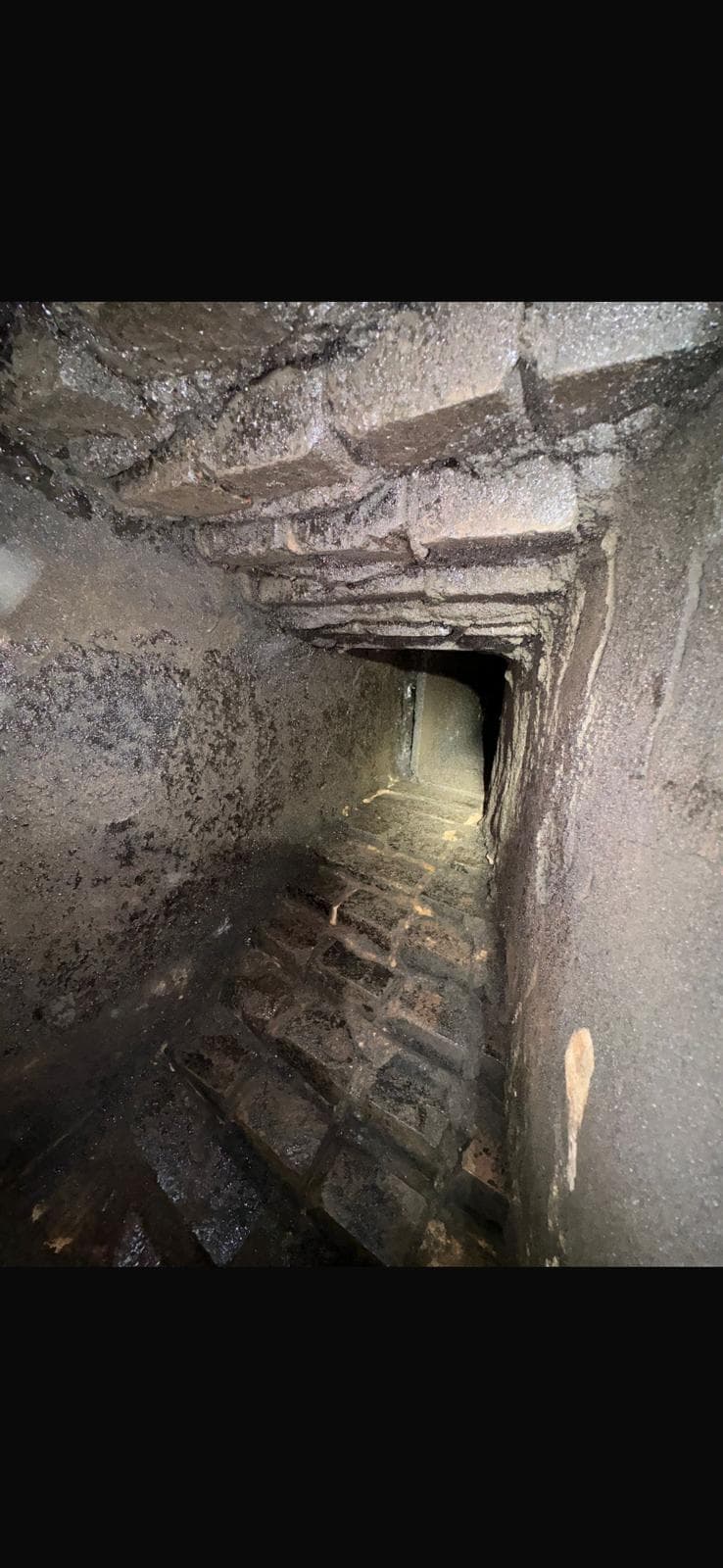
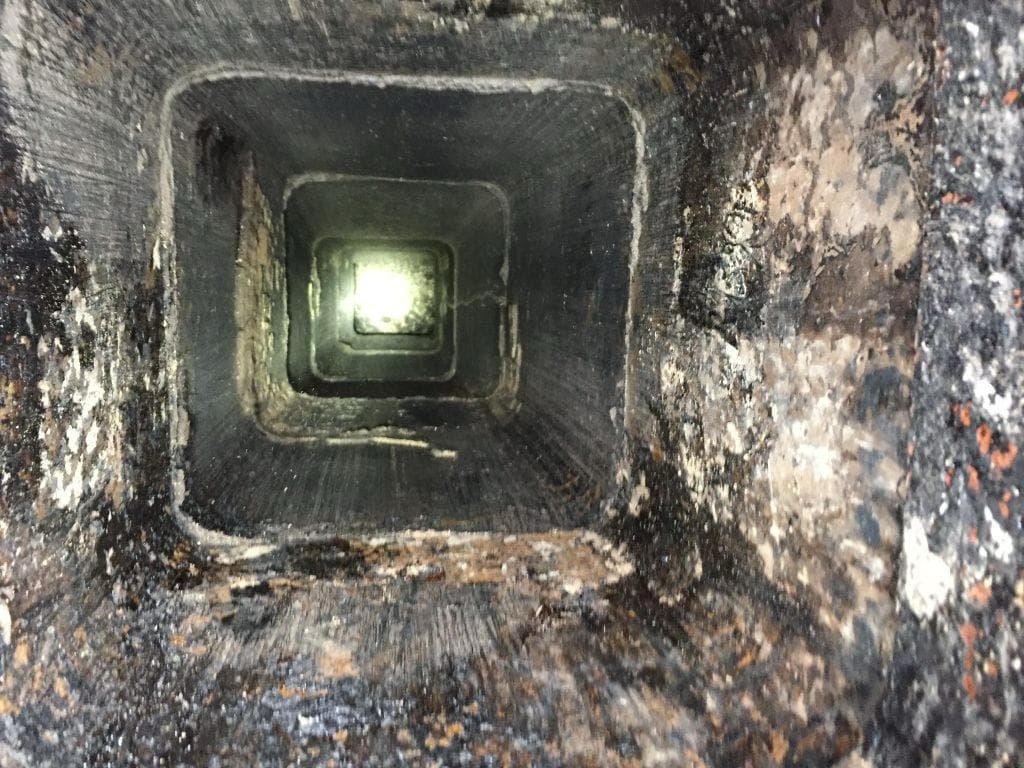
- Creosote build-up in the smoke chamber, which is where it collects first because every corbelled ledge catches it.
- On gas appliances: spillage at the draught hood, which means combustion products are coming into the room rather than going up.
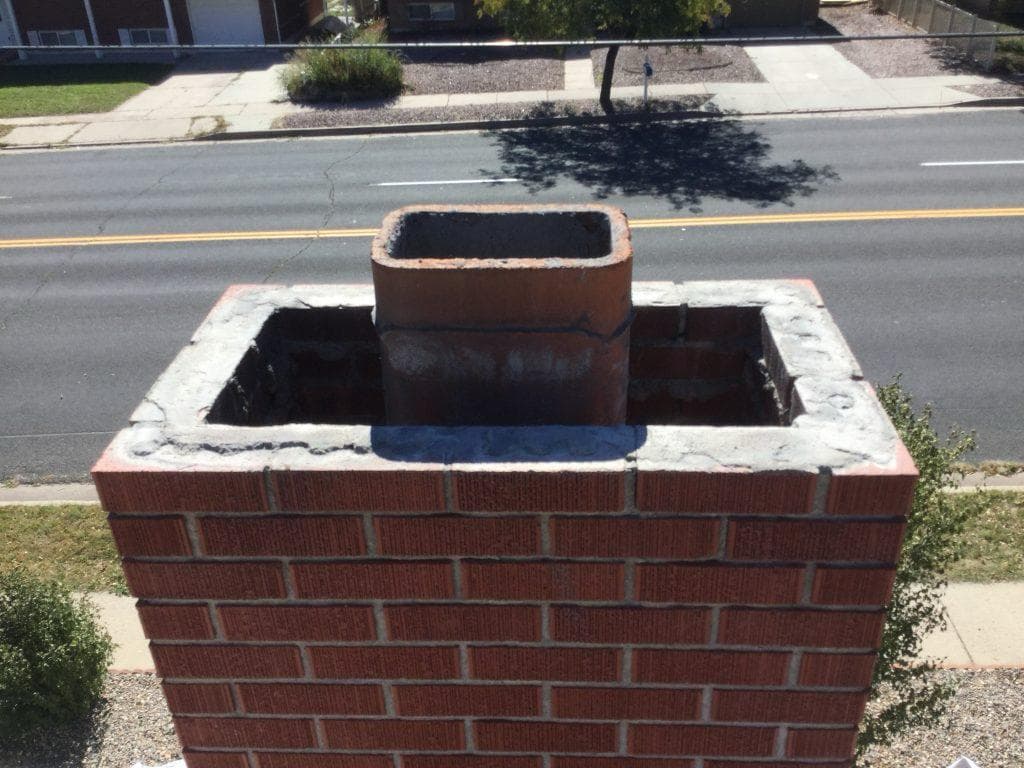
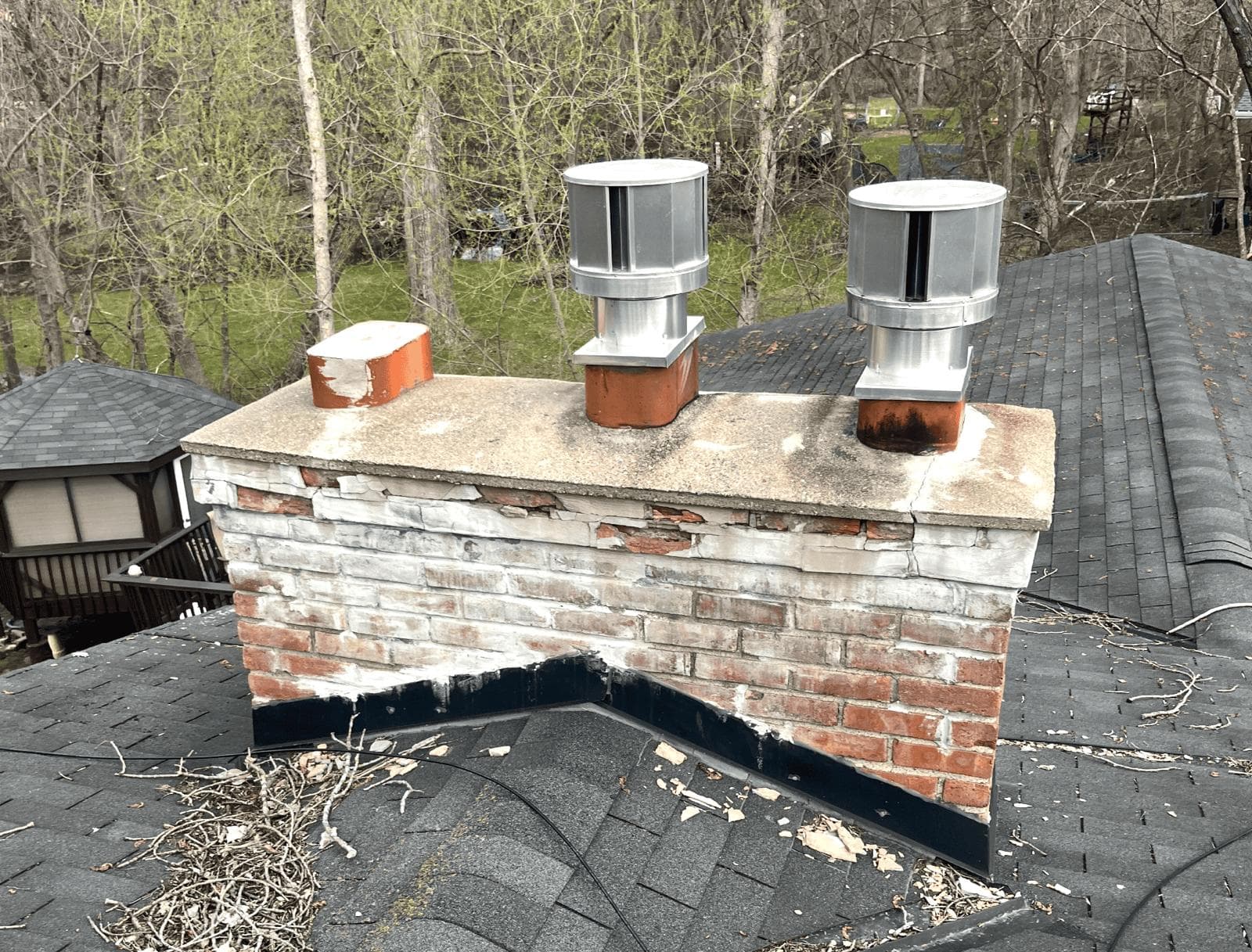
Every photo on this site is our own work. We do not use stock photography.
What separates an inspection from a sales visit
Almost every chimney company in this metro advertises a free inspection or a free estimate. That visit still costs the company money, so it is recovered somewhere on the invoice — and the person doing it has every reason to find work.
We charge $69 so the technician is paid to look carefully and to tell you the truth, including that nothing needs doing. Book any repair off the report and the $69 comes off the invoice. If your chimney is fine you keep a written report with photographs, which is worth having on file.
The practical test of any inspection, ours or anyone else’s: did you get photographs of the things they claim are wrong? A defect that cannot be photographed usually cannot be proven.
Every photo on this site is our own work. We do not use stock photography.
What this looks like
Our own work, around the metro
Every photo on this site is our own work. We do not use stock photography.
Why this one needs a technician
Most of what matters is out of sight — inside the flue, on top of the crown, or behind the smoke chamber. From the ground you can see perhaps a fifth of the structure, and none of the parts that fail first.
Questions we get asked
How often should a chimney be inspected?
NFPA 211 calls for an inspection once a year for any chimney in use, whether it burns wood or gas. Gas gets skipped most often, and it is the one where a venting fault is invisible — carbon monoxide has no smell.
Does a gas fireplace need inspecting if it looks clean?
Yes, and clean is not the point. What matters is whether it still vents properly under load, whether the gas pressure is right, and whether the flame pattern has changed. None of that shows on the glass.
What happens if the inspection finds nothing wrong?
You pay $69 and keep the written report with photographs. That is the outcome we would rather have, and it is the one a free-estimate model quietly discourages.
Book the $69 inspection
Tell us what it is doing and we will come and look. Credited back in full when you book the repair — or call (816) 573-3499 and we will take the details on the phone.
The service this points to
Inspection
A chimney inspection is a documented condition assessment of the flue, liner, firebox, crown, cap and flashing, delivered as a written report with photographs rather than a verbal opinion.
Chimney Sweep
A chimney sweep removes the creosote, soot and debris that build up inside your flue during the burning season, restoring draft and removing the fuel source for a chimney fire.
Repair
Chimney repair covers the masonry itself — repointing failed mortar joints, replacing spalled brick, rebuilding a cracked crown, and in the worst cases taking the stack down to a sound course and rebuilding it.